
A new study shows that teacher-led innovation has a big effect on the future of education, and AI-assisted classrooms are becoming more and more popular with young students. Early results show that AI-Assisted Classrooms are helping students understand better, get more involved, and improve their critical thinking skills with the help of smart digital tools. Teachers who took part in the study say that AI-Assisted Classrooms help them keep better track of students’ progress, tailor lessons to each student, and cut down on administrative work. Analysts say that this change is a big deal for modern education because AI Assisted Classrooms work with traditional teaching methods to make learning more interesting and effective.
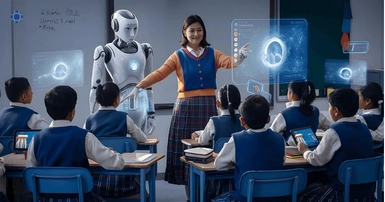
Researchers in charge of the project say that AI-Assisted Classrooms are helping students aged 7 to 15 in a big way. AI Assisted Classrooms now need to have interactive learning apps, quizzes that change based on how well students do, and systems that give feedback in real time. Teachers say that the technology helps them find learning gaps much faster, which means they can help students who are having trouble right away. Teachers can also change the content in AI Assisted Classrooms to fit each student’s learning speed, making sure that no one falls behind. Parents who took part in the study were hopeful because they saw that their kids were more focused and motivated.
AI-Assisted Classrooms Change the Way Teachers Teach, Make Students More Confident, and Improve Their Digital Skills
The study found that AI-Assisted Classrooms greatly improve students’ digital literacy, which helps them get around in a world that is full of technology. AI Assisted Classrooms help young students get used to digital simulations, interactive worksheets, and AI-based tests very quickly. Teachers say that AI-Assisted Classrooms help students think for themselves because they can learn about things on their own through guided digital modules. Many schools that use AI Assisted Classrooms say that there are fewer behavior problems and more collaboration between students.
AI-Assisted Classrooms also help teachers by giving them detailed information about how well each student is doing. These insights help teachers plan lessons more accurately by letting them group students by how well they are doing and come up with specific interventions. Trainers say that the real success of AI Assisted Classrooms is that they can make human teaching better instead of replacing it. The study stresses that AI Assisted Classrooms work best when teachers are still the main part of the learning process.
AI-Assisted Classrooms help students feel better about themselves as well as help them learn. Real-time feedback helps people feel less anxious, and interactive tasks make learning fun. Schools that tested AI-Assisted Classrooms said that attendance rates went up and more students took part in STEM-related activities. The results are in line with research from UNESCO’s Education Sector, which keeps an eye on how digital learning is being used around the world.
Rural schools are also trying out AI-assisted classrooms with cheap tablets and learning apps that don’t need the internet. AI Assisted Classrooms may soon close long-standing gaps in education as digital connections get better in more places. A number of provincial governments are interested in paying for AI-Assisted Classrooms as part of larger efforts to make things more digital.
AI-Assisted Classrooms Help Teachers, Prepare Students for 2030 Skills, and Give Ideas for Future Curriculum Models
Experts say that AI-Assisted Classrooms will be very important in making new curriculums. Schools that are testing these systems are already changing their lesson plans to include digital storytelling, science experiments powered by AI, and virtual lab simulations. People who make school curriculums think that AI-Assisted Classrooms could lead to a big change toward competency-based education that focuses on skills like digital communication, creativity, and problem-solving.
Teachers who took part in the study said that AI Assisted Classrooms make their jobs easier by automating attendance, grading, and keeping track of assignments. This gives teachers more time to lead discussions, plan group projects, and help students. Teachers are learning how to use AI tools in training workshops. This makes sure that AI-Assisted Classrooms work well in a variety of academic settings.
AI-Assisted Classrooms are very helpful for students who are getting ready for their future careers. Getting kids used to technology at a young age helps them learn how to use digital tools, programming logic, and AI ethics. Analysts say that AI Assisted Classrooms will be very important for getting students ready for jobs in 2030, when being able to read and understand data and solve digital problems will be very important.
The schools that took part in the study think that AI Assisted Classrooms will be used by more schools in the next two to three years. Parents, teachers, and policymakers all see AI Assisted Classrooms as a way to improve the quality of education and the economy in the long run.
Follow the latest News Updates only on Update Link!